
Private Natural Heritage Reserve
Cerrado protected forever in Chapada dos Veadeiros
Almost half of Vita Park is a nature reserve. Its 23.27 hectares are recognised as a Reserva Particular do Patrimônio Natural — a private reserve under Brazilian law, registered as RPPN Vita Parque — in Alto Paraíso de Goiás, high on the Chapada dos Veadeiros plateau. The protection is perpetual: it is recorded on the property deed and holds for any owner, now and in the future. Across the rio dos Couros, which marks the edge of the reserve, Chapada dos Veadeiros National Park begins.
- Area
- 23.27 hectares, within Vita Park’s 48 hectares
- Recognised
- 2001, IBAMA Ordinance no. 21/2001 (federal RPPN)
- Altitude
- 1,300 to 1,360 metres
- Biome
- Cerrado
- Neighbour
- Chapada dos Veadeiros National Park, across the rio dos Couros
- Context
- Inside the Pouso Alto Environmental Protection Area
- Management Plan
- Funatura, 2025
What an RPPN is
A Reserva Particular do Patrimônio Natural is a protected area created by the will of the landowner. Brazil’s protected areas law (Law no. 9,985/2000) defines it, in article 21, as private land recorded in perpetuity for the purpose of conserving biological diversity. The commitment is signed with the environmental agency and registered on the property deed, as Decree no. 5,746/2006 sets out. Inside an RPPN only scientific research and visitation for tourism, recreation and education are allowed, always according to the Management Plan.
Federal reserves such as Vita Parque are recognised and overseen by ICMBio. According to the Brazilian RPPN Confederation, the country has more than 1,850 of them, voluntarily conserving over 800,000 hectares.
A sample of the high plateau
The reserve occupies a stretch of the high Chapada dos Veadeiros, between 1,300 and 1,360 metres. The land slopes gently down to the rio dos Couros, whose clear water is stained dark by humic acids. The river belongs to the Tocantinzinho basin, part of the greater Tocantins basin, and is fed by the diffuse springs and wetlands the reserve protects.
Apart from the internal paths, which account for 1.2% of the area, the reserve is entirely covered by vegetation. The Management Plan survey mapped a mosaic typical of high-altitude Cerrado:
- Shrub savanna (campo sujo)41.3%
- Sparse cerrado23.8%
- Wet grassland20.4%
- Murundus fields6.0%
- Disturbed area, recovering4.4%
- Gallery forest, along the river2.6%
- Vereda (buriti palm wetland)0.3%
The murundus fields are the reserve’s most distinctive landscape: small earth mounds, under ten metres across, carrying shrubs and trees, scattered over wet grassland. They are fragile environments, tied to the water table. The Management Plan also records endemic and threatened plants, such as the acacia Mimosa cyclophylla, critically endangered, and everlasting flowers of the genus Paepalanthus.
Who lives here
In three days of fieldwork, researchers recorded 85 bird species inside the reserve. Counting records from neighbouring RPPNs, 145 species use these habitats. Five of the species recorded are endemic to the Cerrado: the horned sungem, the collared crescentchest, the helmeted manakin, the white-banded tanager and the yellow-faced parrot. The wider inventory also includes the sharp-tailed tyrant and the bare-faced curassow, both listed as vulnerable by the IUCN. Blue-and-yellow macaw, toco toucan and red-bellied macaw complete the list.
Camera traps caught no large mammals during the survey, but neighbouring reserves have recorded the maned wolf, vulnerable on Brazil’s national list, as well as the grey brocket deer, the crab-eating fox, the Brazilian porcupine and the southern naked-tailed armadillo. Since the RPPN borders the National Park, the same fauna is expected here.
Part of a conservation corridor
Chapada dos Veadeiros National Park, next door to the reserve, was created in 1961 and expanded in 2017 to around 240,000 hectares. Together with Emas National Park it forms the Cerrado Protected Areas, a UNESCO Natural World Heritage site since 2001. The reserve also sits inside the Pouso Alto Environmental Protection Area, a state protected area of 872,000 hectares across six municipalities.
Together with the Campos Úmidos Vochysias, Murundu, Terra Vochysias and Biorregional reserves, Vita Parque forms a set of private reserves that buffers the town’s pressure on the Park and acts as a bridge for wildlife. That role matters: the Cerrado remains the country’s most deforested biome, with 540,614 hectares lost in 2025 — 54.9% of all deforestation in Brazil, according to MapBiomas. In 2025, Vita Park joined the proposed Veadeiros–Paranã Mosaic, which seeks Ministry of the Environment recognition for the integrated management of 42 protected areas in the region.
Funatura and the Management Plan
Every RPPN needs a Management Plan, the technical document that sets the zoning, the rules of use and the reserve’s programmes. Vita Parque’s was written in 2025 by Funatura – Fundação Pró-Natureza, one of the pioneering organisations in Cerrado conservation. Founded in Brasília in 1986, Funatura led the creation of Grande Sertão Veredas National Park, contributed to the drafting of the protected areas law and today supports the RPPNs of Chapada dos Veadeiros.
The plan is part of the Aroeira Project for Private Land Conservation, run by Funatura with support from Funbio through the COPAÍBAS Programme. The planning was discussed at a workshop held in the reserve itself in July 2025, and the plan was submitted to ICMBio in December 2025 for approval. The zoning divides the reserve into four zones:
Protection
30.6%The best preserved areas. Protection, research and monitoring only.
Moderate use
2.3%An edge strip that filters outside pressure and supports fire prevention.
Visitation
8.7%Environmental education, contemplation and nature observation, with light structures.
Recovery
58.4%Areas hit by fire, under restoration.
Fire and recovery
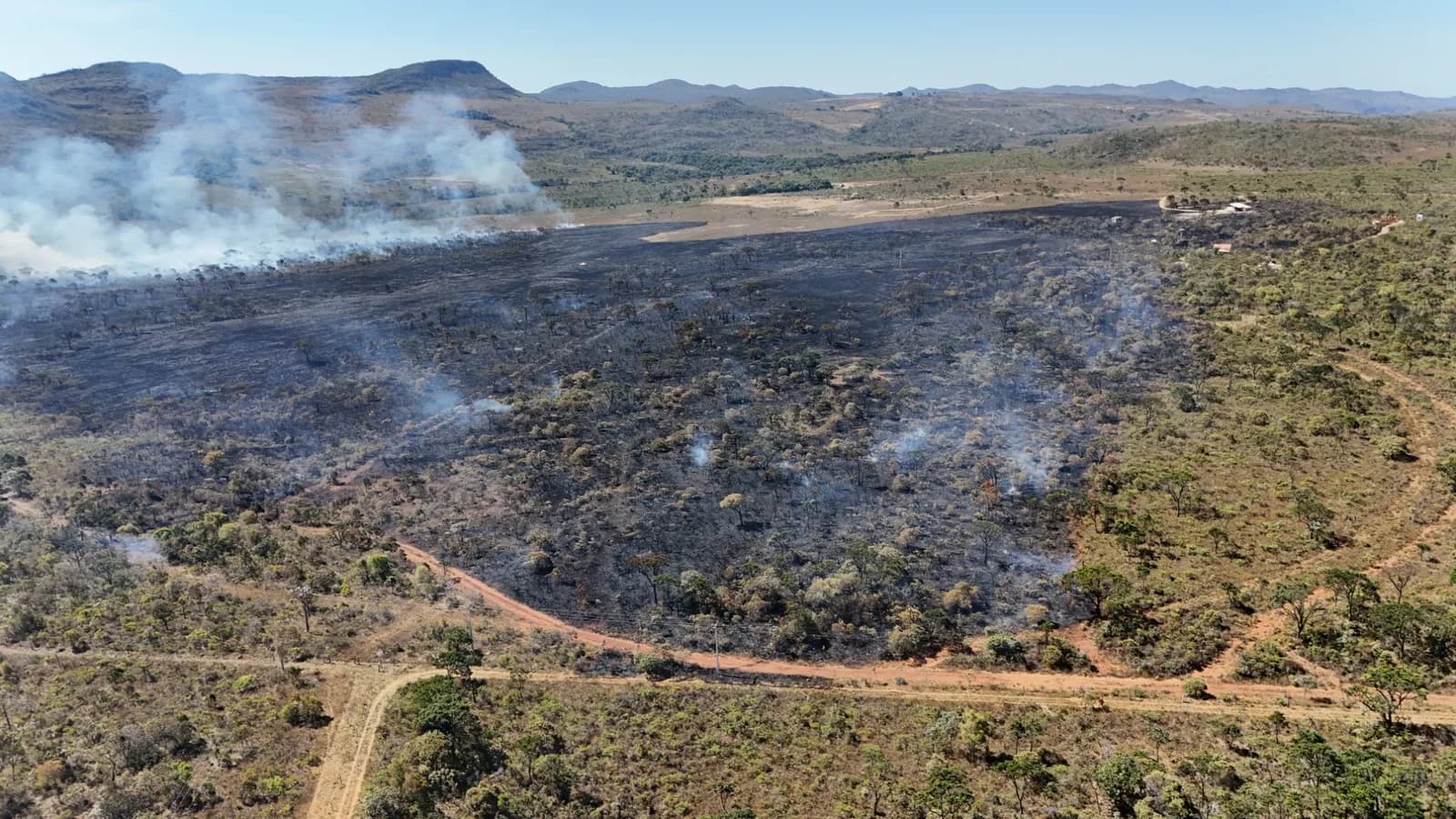
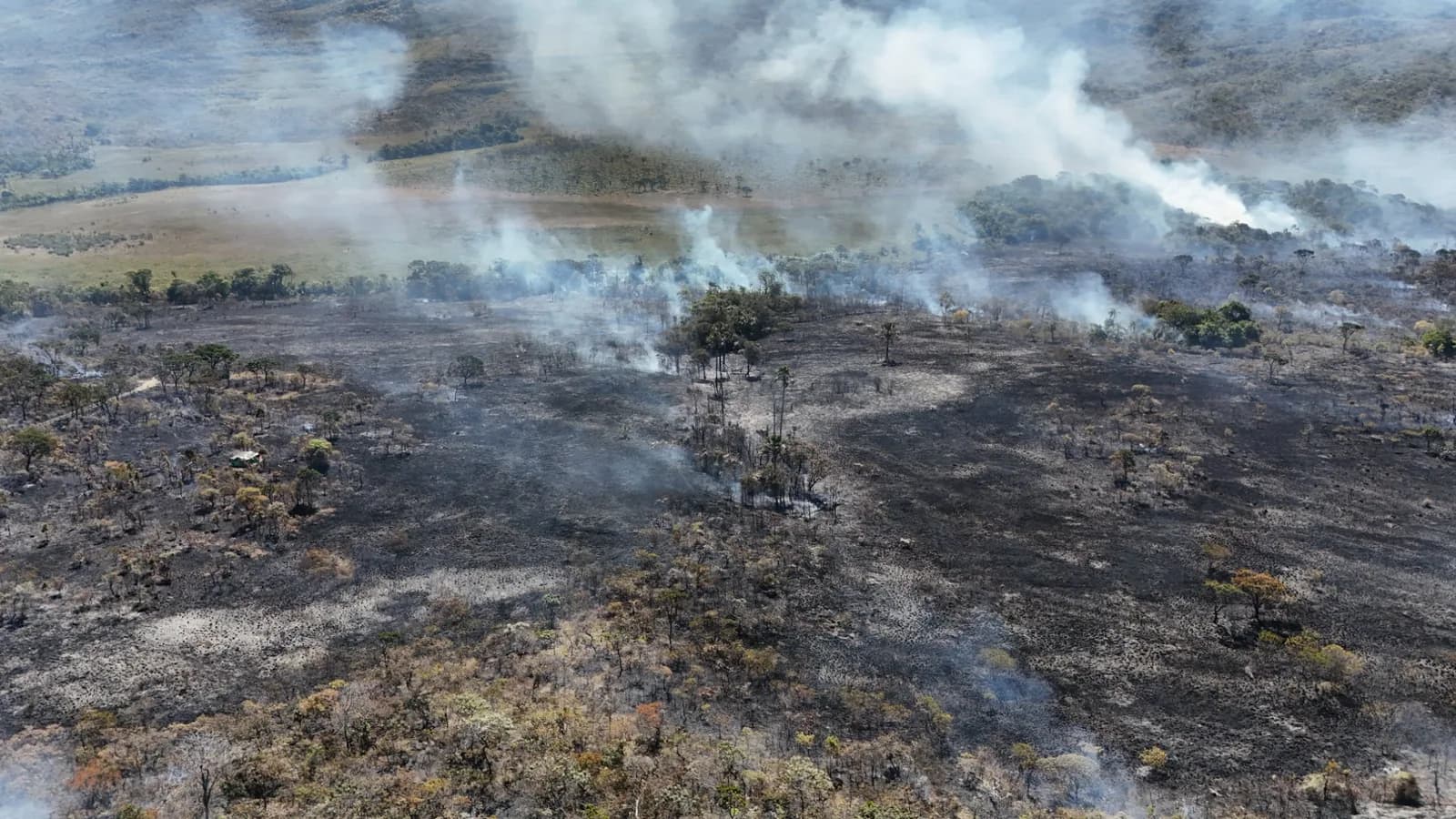
Fire is the greatest threat. After a large fire in 2017 the reserve regenerated almost entirely on its own; in September 2025 another fire burned 13 hectares, 57% of the area. That is why more than half of the RPPN now sits in the Recovery Zone, and why the Management Plan includes an integrated fire management programme, with firebreaks, satellite monitoring and protocols aligned with the National Park. Where bracken has taken the place of native vegetation, recovery will be assisted by planting Cerrado species.
Visiting and research
The reserve is not open to visitors yet. Until ICMBio approves the Management Plan, the law allows only protection and scientific research there. After that, the plan foresees small, careful public use, concentrated in the Visitation Zone:
- The Caminho dos Murundus interpretive trail, 2.5 km with stations on soils, flora, fauna and the sounds of the Cerrado.
- The Mirante do Silêncio, a viewing platform facing the rio dos Couros.
- The Cerrado nas Mãos observatory, with a weather station, for schools and researchers.
- The Murundu sem Fronteiras scientific residency, for visiting researchers.
- The Ciência e Saberes do Cerrado workshops.
- A small, low-impact campsite.
Researchers and institutions wishing to study the reserve are welcome to get in touch: scientific research is one of the RPPN’s central purposes.
Twenty-five years of commitment
The reserve began with a personal decision: the owner of the land at the time chose to protect it forever. With support from Projeto Veadeiros, coordinated by WWF-Brazil, came the surveys, the maps and the paperwork, and in 2001 the RPPN was recognised by IBAMA, then responsible for private reserves. The land changed hands, was cared for over years by Sigrid Kraft, and today belongs to Vita Park, which took on the same commitment. As the Management Plan puts it: the property may be sold, but the pact with conservation is forever.
Frequently asked questions
- What is RPPN Vita Parque?
- It is Vita Park’s Private Natural Heritage Reserve: 23.27 hectares of Cerrado in Alto Paraíso de Goiás, protected in perpetuity since 2001 and bordering Chapada dos Veadeiros National Park.
- Are Vita Park and Vita Parque the same thing?
- Vita Park is the 48-hectare property, with the retreat and events centre. RPPN Vita Parque is the nature reserve inside it; "Vita Parque" is the official name registered with ICMBio.
- Can I visit the reserve?
- Not yet. Visitation depends on ICMBio approving the Management Plan. Until then, the area is dedicated to protection and scientific research.
- Could the reserve disappear if the land is sold?
- No. An RPPN is recorded in perpetuity on the property deed and follows the land, whoever owns it.
- Who wrote the Management Plan?
- Funatura – Fundação Pró-Natureza, in 2025, supported by Funbio through the COPAÍBAS Programme.
- Can I carry out research in the reserve?
- Yes. Scientific research is allowed and welcome. Get in touch and we will arrange it.
Sources and further reading
Figures on vegetation, fauna, relief, water and zoning come from the RPPN Vita Parque Management Plan, Funatura, December 2025.
- Law no. 9,985/2000 — National System of Protected Areas (SNUC)
- Decree no. 5,746/2006 — RPPN regulations
- RPPN questions and answers — ICMBio
- SIMRPPN — federal RPPN registry
- Brazilian RPPN Confederation
- Chapada dos Veadeiros National Park — ICMBio
- Cerrado Protected Areas, World Heritage — UNESCO
- Pouso Alto Environmental Protection Area — Goiás State
- Deforestation in Brazil in 2025 — MapBiomas
- Veadeiros–Paranã Mosaic — Funbio
- Funatura — about
- Aroeira Project for Private Land Conservation — Funbio